Company Profile
Since being founded in 2015, Yuze Pack is devoted to be the Chinese Leading bulk bag manufacturer with premium quality and prompt delivery to fulfill worldwide bulk bag needs from our distributors and final users.
Production environment protection control allows us to have an eco-friendly production which is highly praised by local government. And we also have an experience team of international business to ensure our cooperation more smoothly.
Advanced Equipment
Yuze Pack has 4 PP Monofilament Extrusion Lines, 50 circular looms, 30 webbing machines,480 sewing machines as well as packaging and test equipments. Our annual capacity is 12,000 tons of semi-finished products and 3 million bulk bags.
Professional Team
In order to provide a better service to customers from different countries, Yuze Pack acquires a membership of Flexible Intermediate Bulk Container Association in United States. And all FIBC from Yuze Pack are covered worldwide by American International Group Insurance Company China Limited.
Factory
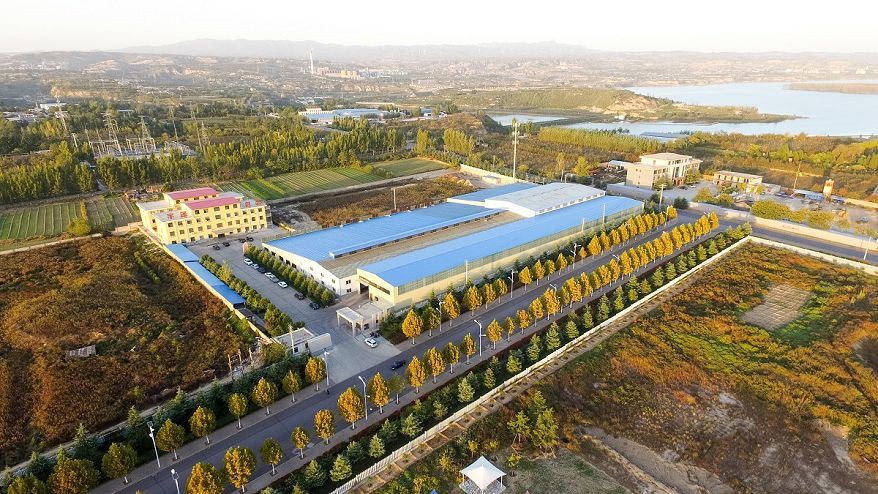
Yuze Pack Limited, established in 2015 with registered capital 19 million RMB, is a Flexible Intermediate Bulk container (or bulk bag/ big bag) manufacturer. Located at Yuncheng City in Shanxi Province next to Sanmenxia City in Henan Province across Yellow River, Yuze Pack has a convenient transportation to Tianjin Port and Qingdao Port.
Certificate
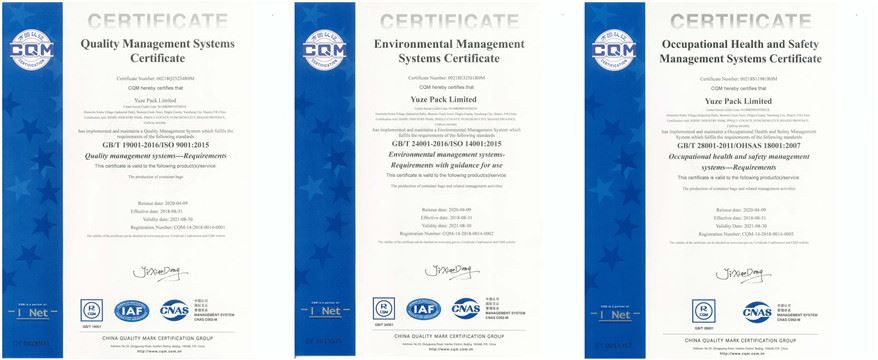
Aiming to be a leading FIBC manufacturer in China, Yuze Pack sets up a comprehensive control system of quality and environment along with employee health protection. It has earned us the ISO 9001:2015, ISO 14001:2015 & OHSAS 18001:2007.
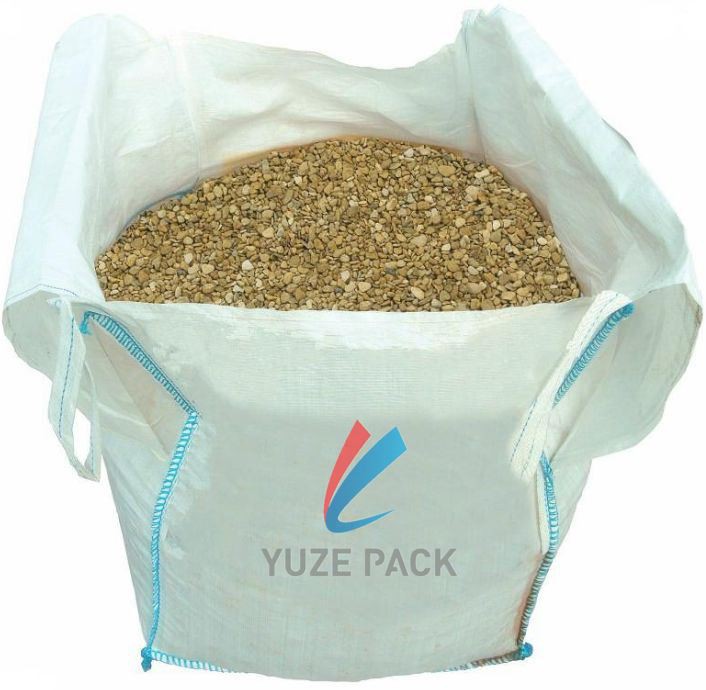
Standard FIBC , though does not necessarily have a standard size or dimension, are structurally flexible. These bags tend to bulge out along the middle when filled. Thus, these standard FIBCs somewhat assume the shape of a pear after being loaded, making it inconvenient to stack up in storage or during transportation.
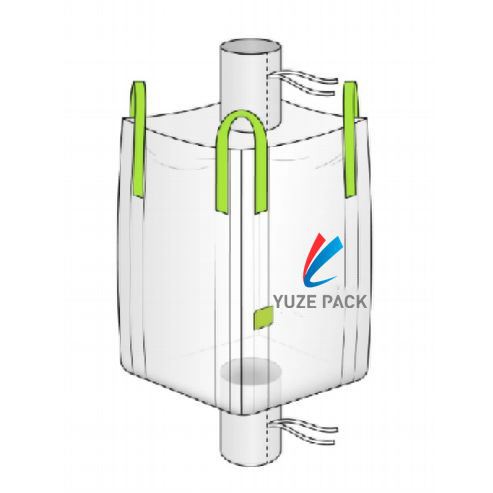
Standard FIBC is a large bag made of flexible woven fabric, designed for storing and transporting dry, flowable products, such as sand, fertilizers, and grains. It usually consists of four lifting loops, a filling spout at the top, and a discharge spout at the bottom, making it easy to fill and empty the bag.
Light Weight, Strong & Sturdy
Unlike other alternatives like gunny bags or steel and metal containers, FIBC/bulk bags are super light- weight, which is a boon in transportation and storage. This is due to the unique single polymer technology Emmbi uses in manufacturing its FIBC bags that makes them highly recyclable and eco- friendly. The woven polypropylene bags are also strong, flexible, sturdy, and durable.
Structure
Structurally, FIBCs can be circular, U-panel or 4-panel meaning that the PP fabric is used either as a tubular fabric or attached as U-shaped panels on the opposite sides or as singular panels attached to form a rectangular structure. This apart, bulk bags can also have additional baffles or strips of fabric sewn to the four corners of the bag to give a firmer shape.
Standard capacity
The best part of Standard FIBC is that they are customisable, meaning that you can get your manufacturer to make bags according to your specifications, including size. The standard width of these bags ranges between 25-50 inches, while the height is between 20-80 inches. In general, bulk bags can hold materials in the range of 1000-4000 lbs.
Breathability
Owing to their mesh-like construction, jumbo bags are breathable, allowing air and water to flow through the bags uninhibited. This kind of packaging is apt for perishable products like fresh agricultural produce. To restrict the ventilation of these bags, additional liners or lamination is used to suit products like flour, sugar, etc.
Reusability/ Recyclability
Standard FIBC can be reused as per their Safety Factor Ratio. Normally, a standard bulk bag has a 5:1 SF Ratio, meaning that it can hold 5-times the bag’s SWL. Such a bag is apt for single use only.
Type A Bulk Bags
Type A bulk bags are all-purpose, all-purpose bags constructed of plain-woven polypropylene. These FIBC bags do not provide static protection and are only used to transport non-flammable materials safely. Type A bags should not contain any flammable liquids or gases.
Type B Bulk Bags
These bags, too, are made of non-conductive materials and should be used in the presence of combustible dusts with MIEs more than 3mj, but not in the presence of flammable gases. Dry, combustible powders are stored and transported safely in Type B FIBC bags.
Type C Bulk Bags
Type C bulk bags, also known as conductive FIBC bags, are made of conductive threads that are woven throughout the bag and link to tabs that must be grounded during filling and/or discharge. The threads safely diffuse static electricity from the bag’s surface. Type C bags are used to properly store and transport hazardous powders as well as flammable gases, dust, or vapors.
Type D Bulk Bags
Type D bags are static-dissipating bags that work similarly to Type C bags but do not require grounding. Instead, specific chemicals are added to the antistatic fabric to prevent brush discharges and incendiary sparks. Type D FIBC bags can be used to safely store and transport hazardous powders, as well as flammable dust or gases.
To precisely estimate the size of bulk totes that you require, you should examine the following factors depending on Standard FIBC;
The product density is packaged in the bulk storage bag (each product has a specific weight).
You must choose the bulk bag/ one ton bag dimensions according to the specifications of your filling equipment to fill and discharge the large sack.
The vehicle’s width, length, and height that will transport the industrial tote bags (truck, container or train wagon, ship) are critical in determining the dimensions of the FIBC. Additionally, the dimensions of the shelves and the company of the warehouse space in which the big bags will be stacking are critical.
Standard FIBC are typically considerably large than other forms of storage, such as cardboard boxes. Thus, it is critical to consider how the bigger size of these containers affects their total weight and how they must be stored. In addition, since Standard FIBC can keep up to two tons (4,000 pounds) of material, lifting and moving them frequently requires specialized equipment. Generally, the bags should be stored on pallets to keep them off the floor and facilitate their movement.
Depending on the items and materials placed in the Standard FIBC, you will have to evaluate the pallets you employ and whether they are robust enough to support the additional weight of the Standard FIBC. A pallet of typical size will hold a 35-inch square Standard FIBC. However, depending on the material of the bag, it may fall over the sides of the pallet, impairing your ability to store and transfer the bag and pallet simply and safely. When empty, the bags are rectangular, but they often take on a more cylindrical appearance once filled.
Key Components of a Standard FIBC
Fabric
The fabric of an FIBC is made of polypropylene, a strong and lightweight material that is resistant to most chemicals and UV radiation. The fabric can be coated or uncoated, depending on the application requirements.
Lifting Loops
These are strong straps attached to the corners of the bag, allowing it to be lifted by a forklift or crane.
Filling Spout
A cylindrical opening at the top of the bag used for filling the contents.
Discharge Spout
A similar opening at the bottom of the bag, equipped with a closure mechanism for controlled discharge of the contents.
Safety Ratio
The safety ratio indicates the maximum load a bag can carry. Most Standard FIBC have a safety ratio of 5:1 or 6:1, meaning they can carry five or six times their safe working load without any risk of failure.
Difference Between Standard FIBC & Baffle Bag
Standard FIBC is generally regular type jumbo bag as dimension of ½ cubic meter, 1/3 cubic meter or 1 cubic meter in size and shape. Bag comes with different types of loops as cross corner loops or standard four loops on bag. When bag is filled with material it becomes in pear shape as material does not stay easily. If Standard FIBCs are not stack properly it can move or damage inside content. Standard FIBC comes in different size and shapes, loops and coated/un coated fabric for moisture resistance. FIBC Bag use for storing flow able materials like sands, cement or animal fodder.
Baffle Bag is type of bulk bag in FIBC category. Baffle Bags are generally use when there is limited space to keep the bag with bulk quantity material. Baffle bag has baffle on its corner and retain its cubic shape when filled with material. Due to its cubic shape it can adjust in limited space. Here baffle bags are stacked properly than Standard FIBC. Bag doesn’t get punctured from outside due to its strong fabric. It is cost efficient bag than Standard FIBC.
Baffle Bag Remain in Shape : After filling material in standard FIBC it get bulge while transporting but Baffle Bag get adjusted itself in cubic shape when filled by material which gives better transportation experience without any hassle.
Both use for Different Materials : Standard FIBC are regular type jumbo bags which are use for transportation of sands and gravel but get bulged when filled with its capacity. Rather baffle bags are use for transportation of pharmaceuticals products which remains in cubic shape after filled and get stacked easily and seen very neat.
When considering the production process for Standard FIBC, it consists of many phases, irrespective of the design or customer requirements. Laminating treatment is ideal for increasing the moisture barrier for items that require a low moisture transfer rate. However, it is essential to weave and cut the fabric before the bag building begins.
Extrusion
The initial stage is extrusion, which melts a mixture of virgin components and forms tapes of specific measures. This procedure utilizes polypropylene (PP) granules, a trace amount of calcium carbonate, UV inhibitors, and maybe color pigments. The assessment of the durability of the tapes is pretty necessary at this point. Then, during the preparation for the weaving step, it is necessary to load the tapes onto industrial bobbins.
Weaving
On weaving looms are loaded the tapes made by PP granules. In this case, the polypropylene fabric that makes up the body is woven into shape for a bulk bag. The material is sufficiently sturdy to convey a wide range of industrial goods and consumables. It is “breathable,” though, and hence vulnerable to moisture transition. The woven PP material is also utilized for loading and unloading components and the material for Standard FIBC.
Moisture
By coating the fabric with a special lamination, it is possible to make each bag humidity resistant. But, this totally depends on the customer’s demands. Lamination is the technique that is perfect for the humidity resistance of Standard FIBC. Moreover, moisture proofing is essential for Standard FIBC that carry granular items and for any product that should not be exposed to humidity.
The un-laminated material of polypropylene comprises small strands with microscopic pores in each fabric. The material is essentially breathable. The transport and storage of diverse materials can be acceptable quality, however not suitable for selected products. For example, sugar and salt, including water absorbed in the air, should never be exposed to water.
Cutting
Firstly, the polypropylene fabric is placed into a slicing machine and cut into precise shapes. The dimensions are determined by whether the process produces sides, edges, or bottoms. Automatic measuring assures exact lengths for each cut. Whether the bulk bag line is square, tubular, or vertically rectangular, the necessary cuts are made at this phase.
Printing
After cutting the polypropylene fabric into shape, it is passed into a printing machine. Imprints are made on the fabric here. Printing happens at this phase if a corporation wishes to apply the brand name or logo to a line of bags. Depending on the brand, a variety of colors may be used. A heavy-duty printer is required for this method to produce the best impressions possible.
Choosing the Right Standard FIBC
Before you start thinking about safe handling practices, you’ll need to ensure that the Standard FIBCs you’re using are the right ones for your business. Some FIBCs are better suited to certain tasks than others. What’s more, the industry you operate in plays a key role in the bulk bags you need to be using. A certain class of bag might be suitable in an agricultural setting, but it’s not going to pass muster if you’re involved in chemical manufacturing.
One of the most important FIBC factors to consider is size. You’ll need bulk bags that are sufficiently large enough to handle the materials you’re working with. Additionally, you’ll need bags that can be accommodated by your handling methods.
Fortunately, FIBCs are divided into several categories to make selecting the right one for your operation easy. Type A bags are typically made from woven polypropylene and are generally very robust and flexible. However, while they’re a cost-effective solution, they’re not suitable for applications such as handling flammable materials. While better suited to hazardous materials, they don’t offer antistatic protection. As such, you’ll need to ensure bags are grounded before they’re filled or lifted.
Yuze Pack Limited, established in 2015 with registered capital 19 million RMB, is a Flexible Intermediate Bulk container (or bulk bag/ big bag) manufacturer. Located at Yuncheng City in Shanxi Province next to Sanmenxia City in Henan Province across Yellow River, Yuze Pack has a convenient transportation to Tianjin Port and Qingdao Port.
Aiming to be a leading FIBC manufacturer in China, Yuze Pack sets up a comprehensive control system of quality and environment along with employee health protection. It has earned us the ISO 9001:2015, ISO 14001:2015 & OHSAS 18001:2007.
As one of the most professional circular bag manufacturers and suppliers in China, we're featured by quality products and competitive price. Please rest assured to buy or wholesale circular bag in stock here from our factory. Also, customized service is available.
 CONTACT