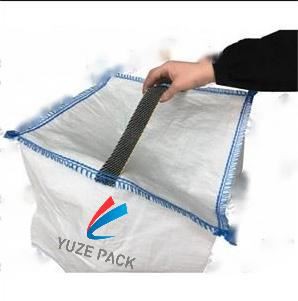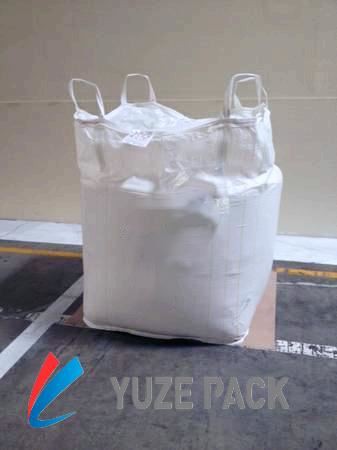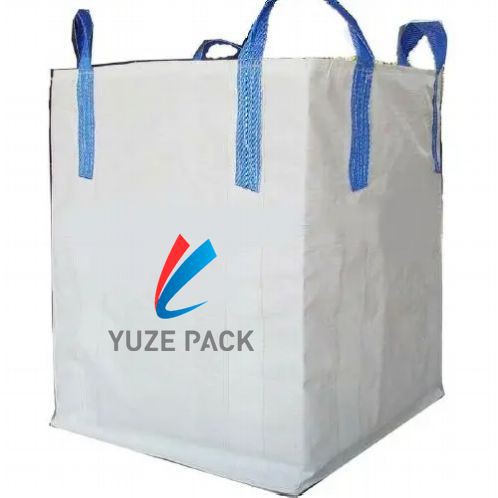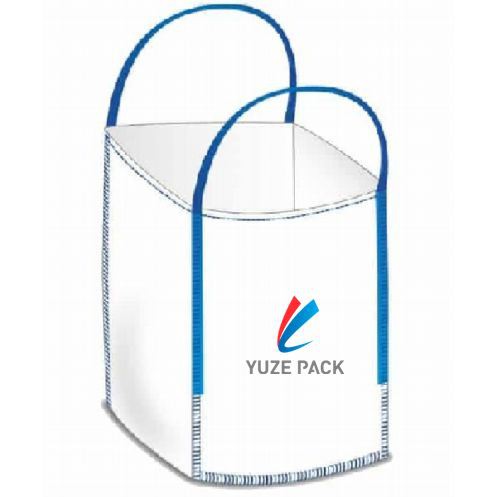
The design of FIBC is not arbitrary, you can't just treat it as an ordinary bag, its quality is related to safety issues. Therefore, no matter it is the initial design, or the selection of raw materials, and the post-production process, each stage must be strictly controlled. In these three stages, there are some common problems that may be overlooked by everyone. Below, I will share with you that FIBC manufacturers should focus on it.
1. Before the production of FIBC, the size and shape of FIBC should be determined on the homepage, the overall size should be determined according to the maximum filling volume of FIBC, and then the tonnage bag should be customized according to the actual use and transportation requirements. To meet the ultimate customer needs.
2. To select reasonable and qualified raw materials for FIBC, new materials must be selected, the quality is more stable and reliable, and the service life is also longer. FIBC is generally made of synthetic fiber woven fabric, and it is not coated with glue or plastic. With the continuous development of science and technology, new materials are constantly coming out. In order to reduce production costs, polystyrene, polyethylene or polyester filament woven fabrics are now mostly used for sewing FIBC. There is also a double-layer container bag, which is also made of polyester filament woven fabric. Its performance is better. If the rodent is mixed into the lining material and then woven into a mesh, it has a rodent-proof and The role of preservation.
3. After deciding the style and raw materials, we will determine the processing method of FIBC. When making bags from blanks, in addition to cutting according to the size of the bag, the key is to determine and process the seam of the bag body. FIBC manufacturers usually use stitching or gluing to make seams, but they must be compatible with the material of the bag. In general, plastic cloth needs high-frequency heat-sealing bonding, chemical fiber woven cloth needs stitching method, rubber cloth is bonded or vulcanized heat bonding method is used. Suture seams are simple and easy to perform, but there is the possibility of partial tearing, needle removal, and thread breakage. Adhesive joints must be secure, and generally need to be tested for adhesive strength. All in all, no matter what method we use to assemble the FIBC, we can't have the phenomenon of misalignment, crooked seam, seam deviation and seam twisting, which will greatly reduce the quality of the FIBC.
 CONTACT